We’ve had robot vacuum cleaners for years, and they’re genuinely useful. Not perfect, of course. Mine would probably still get stuck under the sofa or find something it shouldn’t, but at least it has a fairly simple job.
Now companies want to sell us robots that can fold laundry, clear the table and tidy the house. That sounds much more appealing than watching another robot learn to walk.
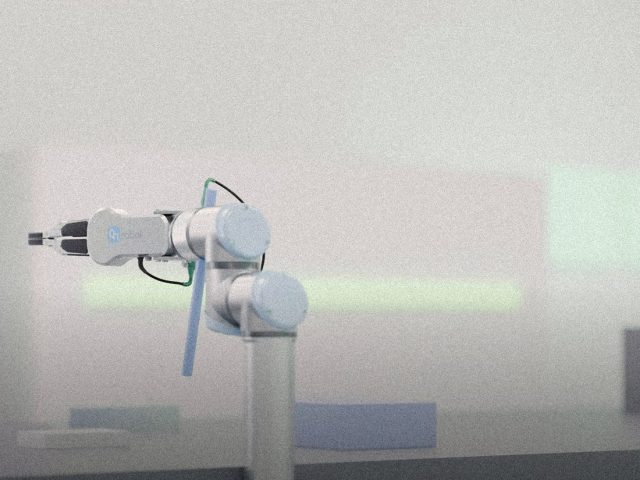
But why does a home robot even need legs? Most of my housework happens on fairly flat floors. Maybe a robot on wheels with two good arms would be far more useful than a humanoid that can climb stairs but struggles to pick up a sock.
I’d quite happily let a robot do the boring jobs. I just want to know whether it can finish them without creating new ones for me.
The short answer, in late October 2026, is that only one robot on this list is sold in British shops and delivered to ordinary homes, and it is a vacuum cleaner with a small arm. Everything else that folds, tidies or loads a dishwasher is either a Californian early-access product, a pre-order or an invite-only beta, and most of them lean on remote human operators when they get stuck. Several of the most promising designs have also quietly taken the publisher’s side of the argument: they roll on wheels and put the engineering into the arms.
Household robots at a glance
| Rank | Robot | Price | Best for | Standout fact |
|---|---|---|---|---|
| 1 | Roborock Saros Z70 | £1,799 RRP ($2,599) | Floors plus picking up socks | The only arm robot here you can buy in the UK today |
| 2 | Weave Isaac 0 | $7,999 or $450 a month | Folding laundry | Shipping to early adopters in the San Francisco Bay Area |
| 3 | Weave Isaac 1 | $7,999 or $449 a month | Laundry and tidying | Wheeled, two arms, California deliveries from autumn 2026 |
| 4 | 1X NEO | $20,000 or $499 a month | Early adopters who accept remote operators | Built in California; US deliveries first |
| 5 | SwitchBot onero H1 | Under $10,000 (company figure) | Smart-home households | Wheeled humanoid with two arms, pre-order only |
| 6 | Sunday Memo | No price yet | Dishes and table clearing | Free invite-only beta from late 2026 |
How we chose and judged these robots
None of the robots ranked 2 to 6 is on sale in the UK, so we have not tested them in a British home. Our ranking draws on independent reporting from journalists who have seen the machines working, on the companies’ own order pages and specifications, and on long-term reviews where they exist. We ranked on four things the publisher asked for: which tasks a robot has been shown to finish, how reliably, how much of the work is done without a human at the other end of a camera, and whether you can actually take delivery. Polished launch videos counted for very little.
The ranked list: household robots that work, and those still learning
1. Roborock Saros Z70: the robot vacuum with an arm you can actually buy
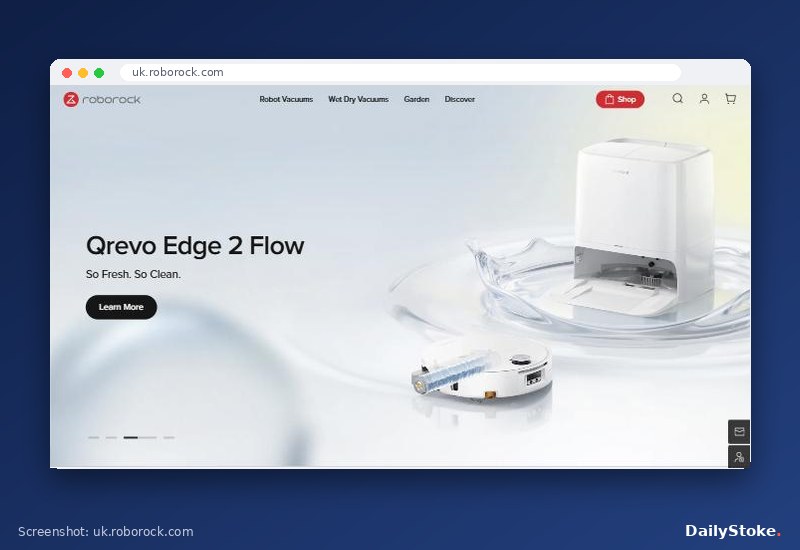
The Saros Z70, first shown at CES in January 2025, is a high-end robot vacuum and mop with a folding five-axis arm Roborock calls OmniGrip. The arm lifts objects up to 300g, so socks, tissues, light slippers, crumpled paper and pet toys, and can move them to a bin or a designated spot before vacuuming underneath.
The vacuum is excellent. Tech Advisor called it one of the best robots it had tested for low-maintenance vacuuming and mopping, with 22,000Pa suction and the ability to climb 4cm thresholds. The arm is a different story. In the same review it sometimes picked up a sock and put it back down in the same place, and twice bumped into furniture with the arm extended. The Irish Times, reviewing it in May 2026, found it placed shoes correctly on more than one occasion but tangled itself at other times, and concluded you would be quicker tidying yourself.
Price: £1,799 RRP in the UK and $2,599 in the US at launch, and widely discounted since, so check the current price before you buy.
Pros
- Proven, delivered product with strong cleaning performance
- Arm handles light clutter that would otherwise jam a vacuum
Cons
- Arm is slow and unreliable in independent tests
- Expensive if you only want the vacuum
2. Weave Isaac 0: one job, done at a table
Isaac 0 from San Francisco start-up Weave Robotics is refreshingly narrow. It is a stationary laundry-folding robot that plugs into the wall and needs a space of about six by five feet. You give it a basket of clean, unsorted washing and it folds. New Atlas, reporting on the launch in February 2026, said a load takes 30 to 90 minutes, that it handles T-shirts, shorts and long-sleeved tops on its own, and that it still needs help with trousers, underwear and pillowcases.
The help comes from people. Weave describes Isaac as a blend of autonomy and teleoperation: when the robot struggles, a remote specialist takes over for a correction of five to ten seconds. Weave says specialists see only the head and wrist camera feeds and that no audio is collected. That is a company statement rather than something independently audited, but it is more specific than most rivals offer.
Price: $7,999, or $450 a month, with a $250 refundable deposit. Bay Area only.
Pros
- Single task, clearly defined limits
- Clear explanation of when remote humans step in
Cons
- Slow, and it does nothing but fold
- US Bay Area only; not available in the UK or EU
3. Weave Isaac 1: wheels, two arms and a sensible list of chores
Isaac 1, unveiled in summer 2026, is the robot the publisher described in his introduction. It rolls on a wheeled base, has a collapsible torso and two arms with simple hands, and stretches from about three feet to five feet nine inches tall, with an 80-inch vertical reach. Weave quotes an eight-hour battery and two-hour charge. Its jobs are grouped into two routines: Laundry Flow (finding dirty clothes, moving loaded hampers, folding and putting away) and Daily Reset (making beds, straightening pillows and blankets, and putting away toys, shoes and clutter).
Like Isaac 0, it runs autonomously by default and calls on remote teleoperation when needed. We found no independent account of an Isaac 1 working in a customer’s home by late October 2026, so everything above is the company’s description of a product that has not yet been delivered.
Price: $7,999 or $449 a month, with an optional $99-a-month membership and a $250 refundable deposit. First deliveries planned in California from autumn 2026, wider US availability through 2027.
Pros
- Wheeled, stable design aimed at real chores
- Lower price than the humanoids
Cons
- Not yet delivered; capabilities unproven outside demos
- No UK or EU plans announced
4. 1X NEO: the humanoid with a human behind it
NEO is the household humanoid most people have heard of. Norwegian-founded 1X opened orders in October 2025 at $20,000, or $499 a month, with a $200 refundable deposit. The company quotes a weight of 66lb (about 30kg), a lifting capacity of 154lb and a carrying capacity of 55lb, and offers no-go zones and face blurring as privacy controls. Production began at a factory in Hayward, California, at the end of April 2026, and 1X says first US customer shipments are planned for 2026, with other markets expected from 2027.
The awkward part is autonomy. When the Wall Street Journal’s Joanna Stern visited 1X before launch in October 2025, the tasks she saw were carried out by a human operator in a VR headset. 1X is open about this: when NEO cannot do something itself, owners can book a session in which a 1X operator controls the robot remotely, and that footage helps train it. As of mid-October 2026, Startup Fortune reported no independently verified case of a buyer outside 1X’s early-access programme using NEO at home. Our full 1X NEO review goes into the detail.
Price: $20,000 or $499 a month. US only for now.
Pros
- Full-size, soft-bodied humanoid designed for homes from the start
- Openly explains its remote-operator model
Cons
- Many chores currently rely on remote humans
- Expensive, US-only, and unproven in ordinary homes
5. SwitchBot onero H1: a smart-home brand builds a wheeled helper
SwitchBot, better known for smart locks and curtain motors, brought onero H1 to CES in January 2026. It is about 1.3m tall with a humanoid upper body and two arms on a wheeled base, and will be sold with either a claw gripper or a five-fingered hand. A SwitchBot representative told Engadget at the show that it would cost less than $10,000 and go on sale late in 2026.
The live demo was modest: onero picked clothes off a sofa, opened a washing machine, loaded the items and shut the door. Engadget noted it took nearly two minutes to load a single item, though the reporter could not tell whether show-floor Wi-Fi was to blame. Folding, cooking and window cleaning appear in promotional material, not in independent demonstrations.
Price: under $10,000, according to SwitchBot; no final price or delivery date confirmed.
Pros
- Wheeled two-arm design from an established consumer brand
- Price pitched well below the humanoids
Cons
- Slow in the only public demo
- No confirmed shipping date or UK availability
6. Sunday Memo: the most thoughtful design you cannot buy yet
Memo, from California start-up Sunday Robotics, is another wheeled robot with two arms and a soft, wipe-clean silicone shell. It reaches the floor or up to seven feet, and Sunday deliberately caps its speed at roughly half a person’s natural pace. Because it rolls rather than balances, it does not fall over when the power is cut. Its published demonstrations focus on the kitchen: clearing plates, glasses and cutlery, scraping food, loading and starting the dishwasher, pulling an espresso and pairing socks.
Sunday trains Memo with a Skill Capture Glove worn by recruited households doing their own chores, and says Memo does not rely on remote operators in the home. That approach impressed investors: Sunday raised $165m in March 2026 at a valuation of $1.15bn. It also says reliability in homes the robot has never seen is still being improved.
Price: none announced. Sunday says a hand-built unit costs about $20,000 and that retail will be lower. A free, invite-only Founding Family beta begins in late 2026.
Pros
- Safety-first wheeled design with clear speed limits
- Training method avoids remote operators in your home
Cons
- Not for sale; beta places are selective
- No price, no UK plans

Wheels or legs? What really matters in a home robot
The publisher’s instinct about wheels is shared by Weave, Sunday and SwitchBot. Wheels are cheaper, quieter and more stable, and a robot that rolls can stop dead without toppling, which matters around children, pets and glassware. Even Unitree, famous for acrobatic legged humanoids, now sells a wheeled G1-D version of its G1 through UK retailers (see our Unitree G1 vs R1 comparison). Legs buy you stairs, and very little else in a typical flat or ground-floor kitchen.
Beyond the body, ask four questions before you place a deposit:
- What has it finished in someone else’s home? Not in a launch video, but in a review or a customer account.
- Who takes over when it fails? If remote operators can see through its cameras, find out when, what they see and what is stored. Our home robot privacy investigation compares the policies.
- Where is it delivered? Almost every robot here is US-only, and several are limited to California.
- What happens if the company stops? These are young businesses. A robot that needs cloud services or remote help is only as durable as the firm behind it.
Ignore backflips, dance routines and speeded-up clips. Sunday labels its videos with playback speeds; look for that kind of honesty.
Home robots in 2027: rules, factories and who can sell what
The household robots on American order books this year are mostly built in California, and regulation is part of the reason. On 28 July 2026 the US Federal Communications Commission added foreign-produced advanced robotic devices, including humanoids, to its Covered List, so new foreign-made models can no longer gain the equipment authorisation needed to be sold in the US unless they win conditional approval. Models authorised before the decision can still be sold. 1X builds NEO at its Hayward factory, opened in April 2026, and Weave designs and builds Isaac in San Francisco. In Europe, the EU Machinery Regulation has applied since 20 January 2027, replacing the old Machinery Directive and bringing safety rules for machines with self-evolving, AI-driven behaviour, which every home robot maker selling into the EU now has to meet.
Home assistant robot FAQs
Can any robot fold laundry at home today?
Yes, but only in a small way. Weave’s Isaac 0 is folding for early adopters in the San Francisco Bay Area, at 30 to 90 minutes a load and with remote help for awkward items. Nothing comparable is on sale in the UK.
Is there a robot vacuum with an arm in the UK?
The Roborock Saros Z70 is sold in the UK with an arm that lifts items up to 300g. Independent reviewers rate its cleaning highly but found the arm slow and inconsistent. Dreame showed an arm-equipped concept at CES 2026, but we found no confirmed UK release.
Do these robots use remote human operators?
Several do. Weave says remote specialists make brief corrections, and 1X lets owners book sessions in which an operator controls NEO. Sunday says Memo does not need teleoperation in the home. Always ask what operators can see and when.
Why do some home robots use wheels instead of legs?
Wheels are cheaper, quieter and inherently stable, and most homes have level floors. A wheeled robot can stop without falling, which is safer around people and fragile objects. The trade-off is stairs.
Can I buy 1X NEO, Weave Isaac or Sunday Memo in the UK?
Not yet. NEO is taking US orders with other markets expected from 2027, Weave has announced only US plans, and Sunday has no price or sale date. See our guide to humanoid robots for the home for what is available.
Are home robots safe around children and pets?
Makers point to soft shells, speed limits and passive stability, but we found no independent long-term safety studies of these robots in family homes. Supervise any home robot until you know how it behaves.