Meta Ray-Ban Display is a pair of smart glasses from Meta and EssilorLuxottica with a small full-colour screen in the right lens, a 12MP camera, open-ear speakers and a wristband that reads tiny finger movements. It went on sale in the UK on 23 September 2026 at £749, including the Meta Neural Band.
I’m quite interested in the Meta Ray-Ban Display glasses. I’ve tried Meta’s glasses in a shop, but that’s obviously different from wearing them every day. Here is our review: what the glasses do, what they cost in the UK, why the camera is both their best and most awkward feature, and why I’m still waiting before I buy.
Meta Ray-Ban Display Promo Code: None needed
Price: £749, including the Meta Neural Band
| Offer detail | What you get |
|---|---|
| Promo Code | None needed. Meta has no standing public promo code for the Ray-Ban Display |
| Price | £749 for the glasses and Meta Neural Band |
| In the box | Glasses, Neural Band and charging case |
| Sizes | Standard and Large |
| Where to buy | Online from Meta and Ray-Ban; in shops, London only at launch |
Meta Ray-Ban Display: key facts
- Official website: meta.com
- Owner: Meta, with EssilorLuxottica (Ray-Ban)
- Headquarters: Menlo Park, California, USA
- Headline offer: £749 including the Meta Neural Band
- Promo Code: None needed (no public promo code)
- Price from: £749 (US $799)
- Free plan or trial: No subscription needed; Meta AI included
- Best features: Full-colour 600 x 600 display in the right lens; 12MP camera with a live viewfinder; Neural Band wrist controls and handwriting; WhatsApp, Messenger and Instagram built in
Meta Ray-Ban Display at a glance
- Made by: Meta with EssilorLuxottica (Ray-Ban)
- Weight: 68g to 70g, depending on size and lenses
- Display: full colour, 600 x 600 pixels, right lens only, 20° field of view
- Camera: 12MP ultra-wide
- Audio: open-ear speakers, five microphones plus a contact microphone
- Storage: 32GB
- Battery: up to six hours; up to 24 hours with the case; Neural Band up to 18 hours
- Lenses: Transitions Gen 8
- Prescription: up to −4.00 to +4.00, Meta says
- Price: £749 with the Neural Band
Our verdict
The Meta Ray-Ban Display is the most complete pair of display glasses on sale in the UK. The colour screen, the camera and the Neural Band work together, and Meta’s apps, WhatsApp, Instagram and Messenger among them, are already there. Against that, at around 70g they are heavy for all-day wear, six hours of battery is short, and the camera raises questions every time you talk to someone. I think smart glasses have a lot of potential, but I’m not convinced one pair needs to do everything, and I’m waiting rather than buying for now.
Pros
- Full-colour display, sharp enough for messages, maps and photo previews
- The Neural Band lets you scroll, click and even write letters without touching anything
- Camera and Meta AI turn what you see into a search
- Meta’s apps are built in, and outside developers can now add their own
- Walking directions work in London
Cons
- The camera makes some people uncomfortable, and it can make you uncomfortable too
- Around 70g, much heavier than ordinary glasses
- Up to six hours of battery before you need the case
- Prescription range is narrow, up to −4.00 to +4.00
- Shop demos limited to London at launch
- £749 is a lot for a first-generation product
What the Meta Ray-Ban Display does
The glasses look like a slightly chunky pair of Ray-Bans. The display sits in the right lens and appears only when you call it up, showing messages, the time, maps, captions, music and Meta AI’s answers in colour. The rest of the time you see through an ordinary lens.
The Neural Band is a fabric wristband that reads the electrical signals in your wrist muscles. Pinch to select, swipe your thumb along your finger to scroll, and since the spring 2026 update you can write letters on any surface with your finger to reply to messages.
In the UK at launch, the glasses handle:
- Messages and calls: WhatsApp, Messenger and Instagram, plus mirrored phone notifications and captions on calls
- Walking directions: turn by turn, now including London
- Live captions and translation: subtitles of what people around you are saying
- Camera: photos and video with a live viewfinder in the lens
- Meta AI: answers to questions about what you are looking at
Cycling directions and public transport times were confirmed only for the US and Canada when the glasses launched in the UK.
The camera: most useful, most controversial
I think the camera could be one of the most useful features, but also one of the most controversial. I already use my phone camera and visual search quite a lot, for example to check ingredients and nutrition information on food, identify plants and places, or look up something that’s difficult to explain in a search.
Having that built into glasses would be convenient, but I’m not sure how much I’d actually use it. I also wouldn’t feel comfortable having a conversation with someone who might be recording me. Maybe that’s something we’ll get used to, but right now it feels a bit awkward.
A small light on the frame shows when the camera is recording, which helps, but the person across the table still has to notice it. That is the trade-off Even Realities avoided with its G2 glasses, which have no camera at all.
Design, display and battery
At 68g to 70g, the Display weighs nearly twice as much as the Even G2, and you feel it on the bridge of your nose after a few hours. It comes in Standard and Large sizes, with Transitions lenses that darken outside.
The 600 x 600 colour display covers a 20° field of view in one eye. It is meant for glances, not for watching films. Reviewers have praised how invisible it is to people around you, and how clear it looks to you.
Meta quotes up to six hours of mixed use, and the charging case adds enough for up to 24 hours in total. The Neural Band lasts up to 18 hours. Six hours is fine for a working day with breaks, but not for a long day out from breakfast to dinner.
Meta Ray-Ban Display price in the UK
- Glasses and Neural Band: £749
- Ray-Ban Meta Gen 2 (camera, no display): from £379
- Prescription: up to −4.00 to +4.00, according to Meta, bonded to the right lens when the glasses are made
The Display costs £370 more than the Gen 2 glasses, which have the camera, speakers and Meta AI but no screen. In the US it costs $799, and Meta charges $200 for prescription lenses there.
How it compares: Even G2 and XREAL Aura
| Meta Ray-Ban Display | Even Realities G2 | XREAL Aura | |
|---|---|---|---|
| Price | £749 with Neural Band | £599; £838 with R1 ring | From $1,279 (US) |
| Weight | 68g to 70g | 36g | 95g, plus a puck |
| Display | Colour, one lens, 20° | Green, both lenses | Micro-OLED, both eyes, 70° |
| Camera | 12MP | None | Not the focus: a display for work and films |
| Runs on | Meta’s own software | Even’s own software | Android XR with Gemini |
| Best for | Everyday, outdoors | Everyday, discreet | Work and films at home |
I’ve also signed up for the upcoming XREAL Aura. I’m curious to see what Android XR and Gemini can offer, particularly for productivity. I don’t really like the separate computing puck and cable, although perhaps I could get used to it.
Aura starts at $1,279 with 12GB of memory and 256GB of storage, or $1,499 with 16GB and 512GB. It opens first in the US, Canada, Japan and South Korea, with more countries following in 2027. For a cheaper XREAL that works as a private screen today, see our Xreal XBX a01+ review.
Actually, I think I’d prefer simpler, lightweight glasses for everyday use outdoors and something more powerful at home for work, entertainment, and other things. Aura seems more like the second type to me.
Why I’m waiting
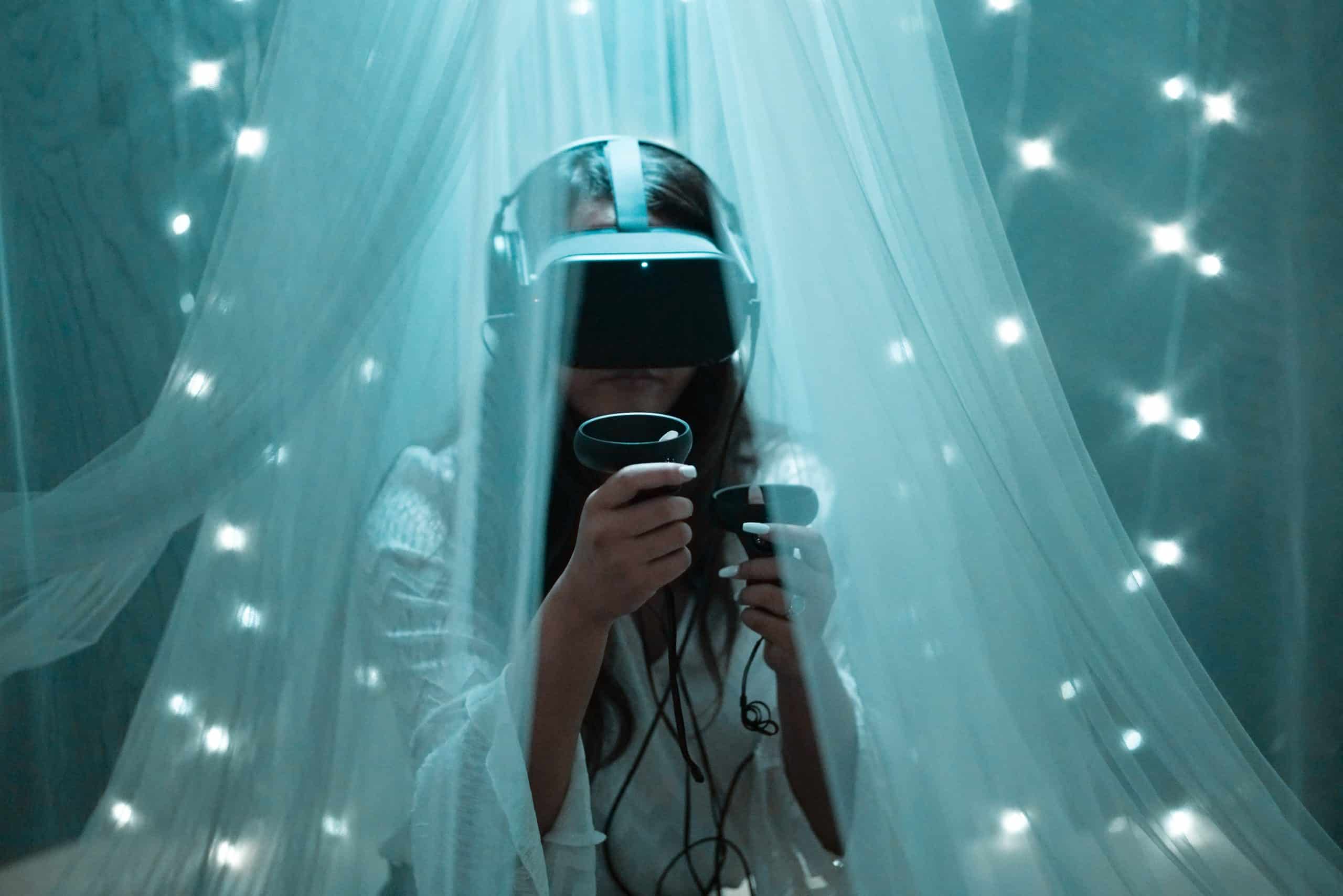
I’m also a bit cautious because of my experience with Oculus. I bought a headset and enjoyed exploring Meta’s virtual world when the hype was at its peak. I also watched a few series for the cinematic experience, which was quite impressive. But I only used it on and off, and wearing it for longer periods became tiring.
That’s partly why I’m waiting. I don’t want to buy another expensive device that seems exciting at first but ends up sitting unused most of the time.
What reviewers say about the Meta Ray-Ban Display
Early coverage after the US launch praised the near-invisible display and the Neural Band, and called the glasses a real step towards everyday augmented reality. The same reviews flagged the short battery life, the weight and fit, and a learning curve with the gestures. Meta itself recommends trying a pair in a shop before you buy.
Since then, updates have added handwriting to all users, display recording, wider walking directions, WhatsApp group video calls and a toolkit that lets outside developers build apps for the glasses.
Should you buy the Meta Ray-Ban Display?
Buy it if you already live in WhatsApp and Instagram, use your phone camera for visual search every day, and want those things in your glasses rather than in your pocket. Try a pair in a shop first, ideally for longer than a few minutes.
Wait if you are bothered by the camera, need a strong prescription, or, like me, have a headset in a drawer that taught you how quickly an exciting gadget can end up unused. I still think smart glasses have a lot of potential, but I’m not convinced one pair needs to do everything. Maybe having something simple for everyday use and something more advanced for home is a better approach.
Meta Ray-Ban Display FAQs
How much is the Meta Ray-Ban Display in the UK?
£749, including the Meta Neural Band and a charging case.
When did the Meta Ray-Ban Display go on sale in the UK?
On 23 September 2026, online and in shops in London.
How long does the battery last?
Up to six hours on the glasses, up to 24 hours in total with the case, and up to 18 hours on the Neural Band.
Can you get the Meta Ray-Ban Display with prescription lenses?
Yes, within a range of up to −4.00 to +4.00, according to Meta. The prescription is built into the lens, so it cannot be changed later.
What is the Meta Neural Band?
A wristband that reads the signals from your wrist muscles, so you can scroll, select and write letters with small finger movements.
Does the Meta Ray-Ban Display have a camera?
Yes, a 12MP ultra-wide camera, with a light that shows when it is recording.
What is the difference between the Ray-Ban Display and Ray-Ban Meta Gen 2?
The Display has a colour screen in the right lens and comes with the Neural Band. The Gen 2 has the camera, speakers and Meta AI but no screen, and starts at £379.