Garmin makes a lot of very good watches. The problem is figuring out which one is actually worth buying.
Search for a Garmin and you quickly end up comparing models that look remarkably similar on paper. A discounted Fenix 7 Pro may cost much less than a newer Fenix 8. A Fenix 7X Pro can sometimes be cheaper than the smaller 47mm version. The Tactix 7 AMOLED shares much of the same core Garmin technology but adds a much better screen. Then there are lighter Forerunner models that cover many of the same everyday features for less.
That makes the usual advice to simply buy the newest Garmin fairly unhelpful.
Most people are really trying to answer a different question:
How much Garmin do I actually need, and what is worth paying extra for?
I had exactly the same problem.
I had been looking for a new Garmin for some time and ended up comparing the Fenix 7 Pro, Fenix 7X Pro, Tactix 7 AMOLED, Forerunner 965, and Fenix 8.
At first I was comparing long specification lists. Eventually I realized that was making the decision harder rather than easier.
Most of these watches already do the important things very well. The differences that actually affected my decision were much simpler: price, size, battery life, screen technology, weight, and build quality.
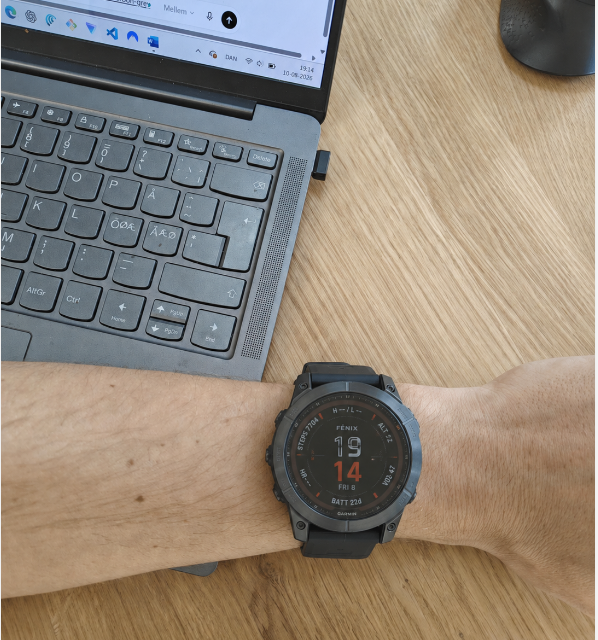
I eventually bought the Garmin Fenix 7 Pro Sapphire Solar.
Not because it was the newest Garmin or the model with the biggest battery, but because it gave me the balance I wanted between features, price, and a size I could realistically wear every day.

The Garmin Watches I Considered
| Model | Main reason to consider it |
|---|---|
| Garmin Fenix 7 Pro Sapphire Solar | Best balance of size, build quality, battery and price |
| Garmin Fenix 7X Pro Sapphire Solar | Bigger 51mm case and much longer battery life |
| Garmin Tactix 7 AMOLED | AMOLED screen and rugged tactical design |
| Garmin Forerunner 965 | Lightweight design and AMOLED display |
| Garmin Fenix 8 | Newer generation for buyers willing to pay more |
What They Already Have in Common
This is worth establishing first, because Garmin product pages can make every model look completely different when the overlap is actually substantial.
Across the premium models I was considering, you already get most of the features I cared about:
- Strong GPS and navigation
- Offline maps
- Garmin Pay
- Heart-rate tracking
- HRV and sleep data
- Recovery and training metrics
- Music support
- Good battery life
The Fenix 7 Pro line also adds Garmin’s newer-generation optical heart-rate sensor and a built-in LED flashlight.
Once I stopped treating every shared feature as a deciding factor, the choice became much easier.
Fenix 7 Pro Sapphire Solar: The One I Bought
The standard Fenix 7 Pro has a 47mm case, and that ended up being one of the biggest reasons I chose it.
That may sound less exciting than GPS or battery specifications, but size matters when you plan to wear a watch all day and sleep with it.
The Fenix still feels substantial and rugged, but 47mm is easier to live with than Garmin’s larger 51mm models.
The main compromise is the display.
The Fenix 7 Pro uses a transflective MIP screen rather than AMOLED. Outdoors, that is a strength. Indoors, it looks much less impressive than something like the Tactix 7 AMOLED or Forerunner 965.
I was coming from a Garmin Venu 2, so that was something I had to think about. AMOLED simply looks better.
In the end, though, the Fenix made more sense overall.
I liked the size, the battery was already more than good enough, and I was not giving up any of the Garmin features I actually cared about.
Fenix 7X Pro Sapphire Solar: Better Battery, Bigger Watch
The Fenix 7X Pro was probably the hardest model for me to rule out.
It is very similar to the 47mm Fenix 7 Pro, but the larger 51mm case gives it a bigger display and significantly better battery life.
That makes it especially attractive for hiking, travel, long GPS activities, or anyone who simply hates charging watches.
The problem is that 51mm is too big.
On a spec sheet, the 7X can look like the obvious choice. More battery, a bigger screen, and sometimes even a lower sale price.
But you still have to wear it.
For me, the extra size mattered more than the extra battery. The standard Fenix already lasts long enough that I did not feel I needed to move up to 51mm.
If you like large watches or have a bigger wrist, I would take the 7X very seriously.
Tactix 7 AMOLED: The Most Tempting Alternative
The Tactix 7 with AMOLED screen was probably the closest to changing my mind, because of the screen.
AMOLED makes maps, menus, watch faces, and everyday use look much sharper and more modern. Coming from a Venu 2, that was appealing.
The Tactix is also a 51mm watch, though, so the same size question applies as with the Fenix 7X Pro.
That left me with a fairly simple trade-off:
Fenix 7X Pro: better endurance and solar charging.
Tactix 7 AMOLED: much better display and more aggressive styling.
Price would decide this one for me.
If the Tactix were only around $50–$100 / £40–£80 more, I could easily justify paying extra for AMOLED.
If the gap moved closer to $150–$200 / £120–£160, I would lean toward the Fenix 7X Pro instead.
Forerunner 965: Better If Weight Matters
The Forerunner 965 is the easiest watch here to wear.
It is much lighter than the Fenix and Tactix models and has a bright AMOLED screen.
If I were mainly buying a Garmin for running, I would take it very seriously.
The reason I did not choose it was more subjective: I wanted something that felt tougher and more substantial.
The Forerunner makes more sense if low weight, running comfort, and AMOLED matter most.
The Fenix makes more sense if you want a more rugged, premium-feeling watch.
Fenix 8: Better, But Worth the Extra?
The Fenix 8 is newer and more advanced.
That is not really the question.
The question is whether the extra cost improves the things you personally care about enough to justify the premium.
For me, the Fenix 7 Pro already covered almost everything I wanted.
Once that was true, paying several hundred dollars or pounds more for the newer generation became much harder to justify.
I would buy the Fenix 8 if its newer features are specifically why you want the watch.
I would not buy it simply because it is newer.
47mm vs. 51mm Matters More Than I Expected
This was probably the biggest thing I underestimated.
On paper, the 51mm models look better because they usually have larger screens and more battery capacity.
In real life, comfort matters. Previously, I have tried to have too large phones, and it is the same with watches and other tools you use every day.
If you want to wear the watch all day and sleep with it for HRV and sleep tracking, that extra size can become more important than an extra week of battery life.
For a medium-sized wrist, 47mm is the safer everyday choice.
A 51mm Fenix or Tactix makes more sense if you specifically like large watches or value maximum battery life.
AMOLED vs. MIP Screen
This was the other big decision. AMOLED looks better. Colors are brighter, maps look sharper, and the whole interface feels more modern. MIP is more practical outdoors and helps the Fenix achieve excellent battery life.
Coming from an AMOLED watch (Garmin Venu 2), the Fenix display can initially feel like a step backwards visually. For me, the trade-off was worth it.
If screen quality is one of your top priorities, I would lean toward the Tactix 7 AMOLED or Forerunner 965 instead.
What I Actually Cared About
After spending far too much time comparing specifications, my list became much shorter:
GPS and navigation: one of the main reasons I wanted a Garmin in the first place.
Garmin Pay: a must-have for me.
Heart rate, HRV, sleep and recovery: more useful day to day than occasional features such as ECG.
Battery life: enough that charging does not become part of the daily routine.
Size: easy to underestimate, but probably one of the most important factors if you wear the watch 24/7.
LED flashlight: not essential, but far more useful than it sounds.
Which Garmin Offers the Best Value?
The answer changes with price.
Fenix 7 Pro Sapphire Solar
At around $450–$500 / £350–£400, I think it is a strong buy.
It offers a premium Garmin experience without moving into current flagship pricing.
Fenix 7X Pro Sapphire Solar
At under $500 / £400, it can be one of the best Garmin deals around if you are comfortable with 51mm.
If it costs the same as or less than the smaller Fenix 7 Pro, it deserves serious consideration.
Tactix 7 AMOLED
This becomes particularly attractive when it is priced close to the Fenix 7X Pro.
I would pay a modest premium for the AMOLED display.
I would not automatically pay several hundred more.
Forerunner 965
This makes the most sense when it is meaningfully cheaper than the premium Fenix models, or when low weight and AMOLED are higher priorities than ruggedness.
Fenix 8
Buy it when the newer features are actually part of the reason you want it.
Do not buy it simply because the model number is higher.
What I Eventually Bought
After going back and forth between all of them, I bought the Garmin Fenix 7 Pro Sapphire Solar.
The Fenix 7X Pro had better battery life.
The Tactix 7 AMOLED had the screen I liked most.
The Forerunner 965 was lighter.
The Fenix 8 was newer.
But the 47mm Fenix 7 Pro made the most sense as something I was actually going to wear every day.
It had the features I wanted, enough battery life that charging was no longer much of a concern, and a size that did not feel excessive.
That was probably the main lesson from the whole search.
Garmin’s range looks complicated because there are so many models and specifications. Once you separate the features they already share from the things that genuinely differ, the decision becomes much simpler.
Pick the size you will actually wear, decide how much AMOLED matters to you, work out how much battery you realistically need, and then buy whichever model gives you those things at the best price.
This keeps almost all of the useful information, but removes the repeated mini-feature lists and repeated explanations of GPS, Garmin Pay, health tracking, and premium construction.


