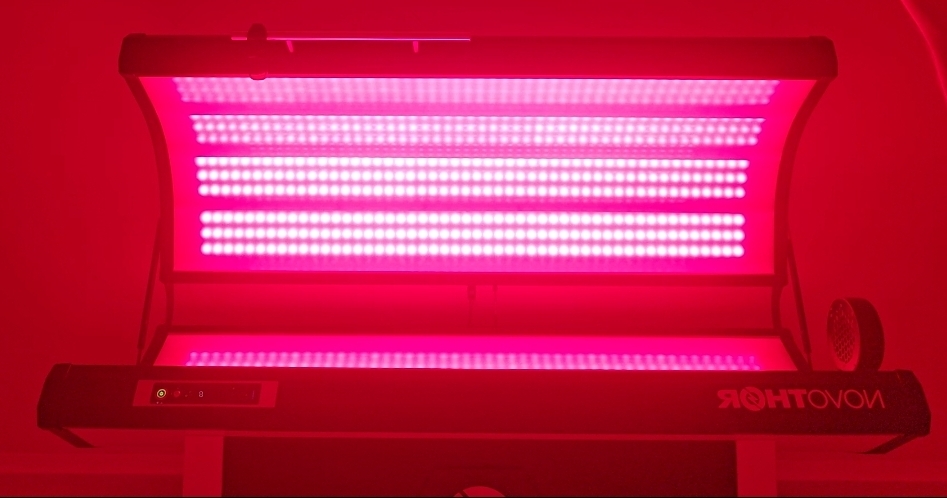
I first tried near-infrared therapy at Chenot in Weggis, as part of a six-day program. Every morning, I spent 20 minutes inside the THOR infrared machine — a warm, quiet space where light is used not for relaxation, but for cellular activation.
The first session felt subtle. A calm warmth, slight mental clarity, nothing dramatic. But over the course of the week, I noticed a shift: less morning stiffness, better focus, and a kind of “internal lightness” that’s hard to quantify. No crash, no overstimulation — just steady, sustained energy.
What does near-infrared therapy do?
Near-infrared therapy is part of a broader field called photobiomodulation (PBM). It uses specific wavelengths of red and near-infrared light (typically 600–1100 nm) that penetrate skin and tissue, reaching the mitochondria — the energy-producing engines in our cells.
The light interacts with an enzyme called cytochrome c oxidase, which plays a key role in cellular respiration. When stimulated by this light, mitochondria are thought to produce more ATP, your body’s cellular fuel. More ATP may mean better recovery, improved tissue repair, reduced inflammation, and even enhanced cognitive clarity.
In the Chenot protocol, PBM is used as part of their cellular repair and detox system — not just for quick recovery, but for long-term mitochondrial support. According to one of the medical staff I spoke to, the effects tend to compound with consistent use. One-off sessions may offer a lift, but stacked exposure over multiple days is where deeper regeneration might occur.
Is near-infrared therapy science or spa marketing?
The evidence is growing. PBM has been studied for everything from muscle recovery to neuroprotection, with promising results — though much depends on wavelength, dosage, and consistency.
For me, after six days in a row, it felt like a background upgrade, maybe: better skin, clearer focus, smoother mornings. Not a miracle — but something shifted.
For now, high-end clinical near-infrared therapy remains a luxury that is hard to come by in most cities in Europe. But as bio-hacking spaces and longevity clinics expand, this “background upgrade” is quickly becoming a staple of modern preventative health.