A satellite communicator is the gadget you hope never to use in anger. It sends text messages and an SOS through satellites when there is no phone signal, which in Britain means most of Knoydart, plenty of Snowdonia’s valleys and a surprising amount of the Pennine Way. For a walker, wild camper, sea kayaker or anyone travelling beyond the masts, it is the difference between “running late, all fine” reaching home and a night of worry, or a rescue starting hours earlier.
We compared the devices you can actually buy in the UK in autumn 2026, from Garmin’s new inReach Mini 3 range to the phone-dependent ZOLEO, SPOT’s Globalstar messengers and the satellite SOS now built into recent iPhones, Pixels and Galaxy phones. Prices for hardware and, crucially, the monthly plans are in pounds where the company publishes them.
Satellite communicators at a glance
| Rank | Device | Price (device) | Best for | Standout fact |
|---|---|---|---|---|
| 1 | Garmin inReach Mini 3 Plus | £439.99 | Most people who head off-grid often | Colour touchscreen plus 30-second voice messages |
| 2 | Garmin inReach Mini 3 | £389.99 | Standalone texting without photo or voice | Up to 350 hours at 10-minute tracking |
| 3 | ZOLEO | about £149 | Value and phone-first users | Keeps one number across mobile, Wi-Fi and satellite |
| 4 | Garmin inReach Messenger Plus | £349.99 | Photo and voice on a budget | Up to 600 hours in low-power mode |
| 5 | Garmin inReach Messenger | £249.99 | Cheapest way into inReach | Up to 28 days at 10-minute tracking |
| 6 | SPOT X | €274 (offer) | Globalstar fans and boat users | Physical keyboard and a dedicated number |
| 7 | Phone satellite SOS | Free with recent phones | Occasional walkers on lower ground | No extra kit to carry |
How we chose
This is a desk-researched comparison built from manufacturer specifications, UK retailer listings, the companies’ published plan prices and long-term owner reports, checked on 29 October 2026. We have not drop-tested or rescue-tested these devices ourselves, and we say so where a figure is a manufacturer claim. Battery figures in particular are measured in ideal conditions with a clear view of the sky; under trees or in a steep-sided glen, expect less.
We weighted four things: how reliably an SOS reaches a staffed rescue coordination centre, the true cost over a year including activation and subscription, how much the device can do without your phone, and weight in the pack.
The best satellite messengers, ranked
1. Garmin inReach Mini 3 Plus
Garmin launched the Mini 3 Plus in December 2025 at a suggested £439.99, and it is the most complete small communicator on sale. The headline change from older Minis is a 1.9-inch colour touchscreen with an on-screen keyboard, so you can type a proper message without your phone. The Plus adds a speaker and microphone for 30-second voice messages, with transcripts shown on the device, and it can display photos sent from home; photos from your own trip go via the Garmin Messenger app on your phone.
It runs on the global Iridium network, SOS alerts go to Garmin Response, a 24/7 coordination centre, and Garmin quotes up to 330 hours at 10-minute tracking.
The catch is running cost: you need an inReach plan, and voice and photo messages count against an allowance. Read our Garmin inReach review for the plan breakdown.
Price: £439.99 (Garmin’s suggested retail price)
Pros
- Usable keyboard and colour screen without a phone
- Voice messages are faster than typing with cold hands
- Global Iridium coverage and Garmin Response for SOS
Cons
- Most expensive device here
- Photo and voice messages eat into plan allowances
2. Garmin inReach Mini 3
The Mini 3 is the same small body and touchscreen without the speaker, microphone and voice features. UK retailers list it at £389.99. It weighs 122.2g, is rated IP67 and tested to MIL-STD-810 for shock and water, and has multi-band GPS for better positioning among cliffs and trees. Garmin quotes up to 350 hours with 10-minute tracking, so a week-long trip on one charge is realistic.
For many walkers this is the sweet spot: you get two-way texting, weather forecasts, tracking and SOS, all operable from the device, and you save £50 over the Plus. If the idea of voice notes from a summit leaves you cold, there is little reason to pay more.
Price: £389.99
Pros
- Proper touchscreen typing in a pocketable unit
- Excellent claimed battery life
- Physical buttons still work with gloves
Cons
- No voice or photo messaging
- Same subscription cost as the Plus
3. ZOLEO
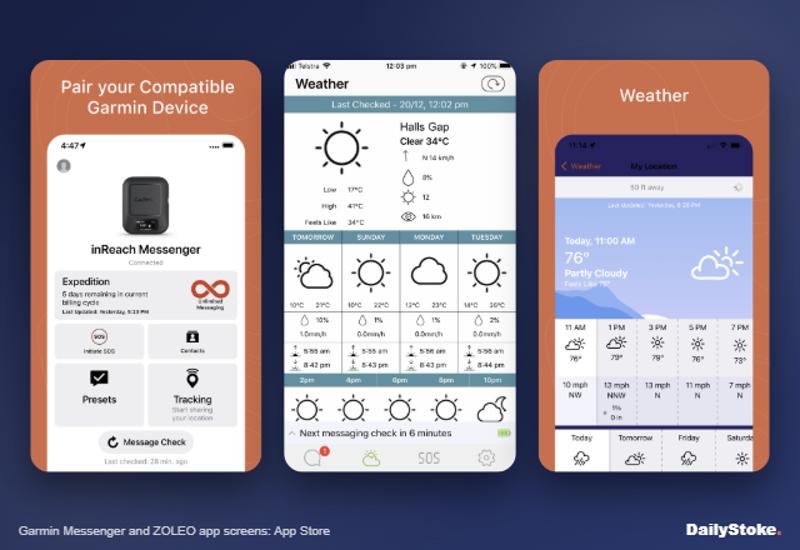
ZOLEO takes a different approach. The 150g puck has no screen; you type in the ZOLEO app on your phone, and the device handles the satellite link. Its cleverest trick is that your messages move seamlessly between mobile data, Wi-Fi and the Iridium satellite network, and you get a dedicated SMS number and email address, so people at home simply reply to a normal text.
There are hardware buttons for SOS and check-in, so you can still raise the alarm if your phone dies. It is IP68 rated to 1.5 metres for 30 minutes and quotes over 200 hours of battery. UK retailer GTC listed it at £149 in October 2026.
ZOLEO overhauled its UK plans in August 2026: Prepare costs £17.99 a month for 50 messages and Protect £29.99 for unlimited messages, with a £19.99 activation fee and a three-month minimum. Live breadcrumb tracking is a £4.50 add-on. Full details are in our ZOLEO review.
Price: about £149 (UK retail, October 2026)
Pros
- Cheapest capable two-way device
- One number for people at home to text
- Simple, phone-style messaging
Cons
- Useless for messaging without a phone
- Live tracking costs extra
4. Garmin inReach Messenger Plus
The Messenger Plus is Garmin’s phone-first device: a 117g rounded box that pairs with the Garmin Messenger app and sends photos and 30-second voice messages over satellite. Its small screen lets you read and reply to texts if your phone fails, but you would not want to compose much on it.
Battery is the standout. Garmin quotes up to 600 hours with 10-minute updates in low-power mode, or around 110 hours in performance mode, and it can top up a flat phone in a pinch. It is IPX7 rated and offers the same Garmin Response SOS as the Mini range.
UK outdoor retailers list it at £349.99, though John Lewis has stopped selling it online, so check stock before you set your heart on one.
Price: £349.99
Pros
- Photo and voice messaging for less than the Mini 3 Plus
- Very long battery life
- Can charge your phone
Cons
- Awkward to use without a phone
- Bulkier shape than the Mini
5. Garmin inReach Messenger
The original inReach Messenger lacks photo and voice but is otherwise a capable, phone-paired texter. At 114g with a monochrome screen, it quotes up to 28 days with a message or location sent every 10 minutes under open sky, or about 14 days under moderate tree cover. GPS Training lists it at £239.99 on sale from £249.99.
Running costs match the dearer models, so choose it for Garmin Response and control from a compatible Garmin watch, not to save on plans.
Price: £249.99 (seen at £239.99)
Pros
- Lowest-cost Garmin inReach
- Superb battery life
- Message automatically switches between mobile, Wi-Fi and satellite
Cons
- Text only
- Typing on the device is slow
6. SPOT X
SPOT, owned by satellite operator Globalstar, sells the SPOT X: a 198.4g handset with a physical keyboard, a built-in compass and a dedicated mobile number. It sends two-way messages and an SOS to a 24/7 search and rescue coordination centre, and quotes 240 hours of battery at 10-minute tracking.
SPOT prices Europe in euros. On its UK site, the SPOT X was €274 in a promotion (normally €299) running to 31 December 2026. Contract plans start at €14.95 a month excluding VAT for 20 custom messages, and SOS and check-ins are unlimited on every plan. Activation is normally €29.95, but Promo Code FREEACT waives it during the same offer, limited to five units on contract plans.
Globalstar does not cover the whole globe the way Iridium does, so check SPOT’s coverage map for remote or high-latitude trips.
Price: €274 (offer price on SPOT’s UK site)
Pros
- Full keyboard, no phone needed
- Unlimited SOS and check-ins on all plans
Cons
- Heavier than the Garmin Mini
- Coverage gaps compared with Iridium devices
7. Your phone’s satellite SOS
You may already own a satellite messenger. Every iPhone from the iPhone 14 onwards supports Emergency SOS via satellite, which has worked in the UK since December 2022; it is free for two years after activation, and in September 2026 Apple again extended free service for iPhone 14, 15 and 16 owners. Google’s Satellite SOS works on Pixel 9 and later models (except the Pixel 9a) in the UK and around 30 European countries. Samsung added satellite support to select Galaxy phones in 2026, through Virgin Media O2’s O2 Satellite service in the UK, so what you get depends on your network.
Phones need a clear sky view, their batteries die fast in cold weather, and they are less waterproof and robust than a dedicated device. Read our emergency apps guide for how to set them up.
Price: free on supported phones (for now)
Pros
- Nothing extra to buy or carry
- Guided SOS questionnaire speeds up rescue
Cons
- Phone battery is your single point of failure
- No long-life tracking for people at home
How to choose a satellite communicator
Network first. Garmin inReach and ZOLEO use Iridium, which covers the entire planet. SPOT uses Globalstar, which has gaps. For Britain and most of Europe either works; for polar, ocean or remote Asian trips, Iridium is safer.
Who answers the SOS. Every device here routes an SOS to a staffed coordination centre that alerts local rescue services, in Britain via the Coastguard, police and Mountain Rescue. Two-way devices let you tell rescuers “broken ankle, two people, shelter”, which is invaluable.
Count the plan, not just the box. Garmin’s activation fee is £39.99 and its cheapest Enabled plan is £7.99 a month with pay-as-you-go texts at 50p. Garmin’s Essential, Standard and Premium plans cost $14.99, $29.99 and $49.99 a month in the US, so check the sterling price for the tier you want before you sign up. ZOLEO costs £17.99 to £29.99 a month after a £19.99 activation. Over a year, the subscription will cost more than the device.
Suspend between trips. Garmin now lets you suspend a plan for up to 12 months without a monthly fee. ZOLEO charges £4 a month to pause after the first three months, and SOS does not work while paused.
Screen or phone? If your phone dies or gets soaked, a screenless device like ZOLEO falls back to pre-set check-ins and SOS only. The Mini 3 range is the only small option that is fully usable alone.
Or put it on your wrist. Garmin’s Fenix 8 Pro builds inReach satellite messaging and SOS into a watch; see our best GPS watches for hiking.
What to ignore. Fancy tracking intervals and apps matter less than battery life and a plan you will keep active.
Satellite communicator FAQs
Is a satellite communicator better than a personal locator beacon?
A personal locator beacon (PLB) sends a one-way distress signal to the international Cospas-Sarsat system and needs no subscription, but you cannot tell rescuers anything or send an “I’m OK”. A two-way satellite communicator costs more to run but lets you explain the emergency and keep family informed. Many sailors and serious mountaineers carry both.
Do I need an inReach if my iPhone has Emergency SOS via satellite?
For valley walks and busy hills, a recent iPhone or Pixel is a sound backup. For multi-day trips, cold weather or water sports, a dedicated device is more robust, keeps going for days or weeks rather than hours, and lets people at home track you. Phone satellite services also depend on the phone’s battery surviving.
How much does a Garmin inReach cost to run in the UK?
You pay a £39.99 activation fee, then a monthly plan. The cheapest, Enabled, is £7.99 a month with SOS included and messages charged at 50p each. Higher plans include message allowances and tracking. You can suspend the plan for up to 12 months between trips.
Will a satellite messenger work inside a tent or under trees?
Often, but slowly. Satellite devices need a view of the sky, and dense tree cover, steep valley walls or a tent fly can delay messages by minutes. Garmin’s own figures for the inReach Messenger halve the battery life under moderate tree cover.
What happens when I press SOS?
The device sends your position to a 24/7 coordination centre, which tries to contact you to confirm the emergency and then alerts the relevant rescue service. In the UK that is typically the police for mountain and inland rescues and HM Coastguard at sea. Use it only for genuine emergencies, and if you have phone signal, call 999 or 112 first.