Palazzo Fiuggi sells longevity in an Art Nouveau palace an hour from Rome, with a menu designed by one of Italy’s most decorated chefs. The seven-night Longevity program lists more than 40 separate items, from carotid ultrasound to “bodywork deep detox.” We went through them one by one to see which carry real clinical weight, and what the week costs once the room is added.
The question: could good food be more useful than an expensive detox treatment?
One thing I remember from Chenot is just how much food became part of the conversation. When you’re eating so little, you spend an extraordinary amount of time thinking about your next meal.
That’s why Palazzo Fiuggi caught my attention. Its nutritional program has been developed with Michelin-starred chef Heinz Beck, and the idea of combining medical wellness with genuinely good food sounds rather more appealing.
I like eating well. Seafood, fresh ingredients, interesting dishes and a glass of something good occasionally. I wouldn’t want a healthy lifestyle to mean giving all that up.
And perhaps that’s a more useful approach to longevity anyway. If a hotel can teach me how to eat better without making food feel like a punishment, I might actually continue when I return home.
Of course, Palazzo Fiuggi offers much more than food, including medical assessments and treatments. I’d like to know which of those add something meaningful, and which are less important than the basic changes to diet and exercise.
DailyStoke has not stayed at Palazzo Fiuggi, so this is a research-led review based on the resort’s current program pages, published research and independent reporting, checked in October 2026.
Verdict: Palazzo Fiuggi’s Longevity week is a generous, well-structured medical check-up wrapped in a very good Italian spa holiday, and its food philosophy is the most sustainable thing on offer. But the program fee does not include the room, several of the scans are screening tests that independent panels advise against for people without symptoms, and the colon hydrotherapy and IV infusions have no good evidence for healthy adults. The best value is in the consultations, the blood work, the DEXA and the movement assessments.
Palazzo Fiuggi at a glance
- Location: Fiuggi, in the hills of Lazio, about 50 minutes from Rome; around 700 m above sea level
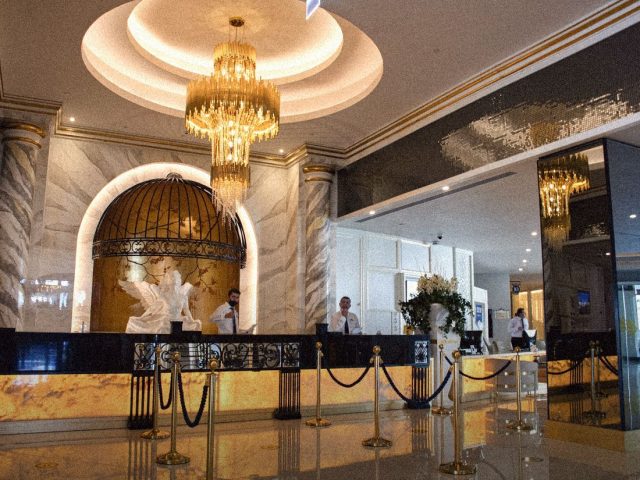
- Building: a 1913 Art Nouveau palace, reopened as a wellness medical retreat in May 2021 by the Giannuzzi family and the Forte Hotels group
- Size: 102 rooms and suites; around 6,000 square meters of spa, medical and movement facilities
- Featured program: Longevity, 7, 10, 14 or 21 nights
- Program price: €7,000 for seven nights, VAT included, room not included (checked October 2026)
- Other longevity versions: Longevity Full Body Check (€9,000), Andros Longevity for men (€10,100), and a Femina Longevity program for women
- Food: a “longevity daily food line” created with three-Michelin-starred chef Heinz Beck
- Medical model: programs devised with Professor David Della Morte Canosci; current pages credit the property’s “Health and Scientific Management”
- Firsthand evidence: not visited
The food: the part most likely to last
Palazzo Fiuggi’s diet is not a fast. The resort describes it as “food experienced as a true medicine”: a personalized Mediterranean-style plan, designed by Heinz Beck with Della Morte Canosci, chosen for anti-inflammatory and antioxidant properties. The resort’s own magazine adds that weight loss is not meant to be the only goal. No calorie target is published, and guests eat three meals a day plus snacks, herbal infusions and Fiuggi spring water.
Compared with an 850-calorie week, that matters. Dietary change only helps if it continues, and a plan built on fish, vegetables, olive oil and proper cooking is easier to keep than a peach for breakfast. It also matches the standard advice on eating for heart health far more closely than any single spa treatment on the menu. Credit where due: on food, Palazzo Fiuggi has chosen the right battle.
Some claims overreach. The resort’s diet page says following its plan “will guarantee weight loss,” and its medical pages credit Fiuggi’s thermal water and high-salinity pools with anti-inflammatory effects, citing no studies.
Every item in the Longevity week, and what it is worth
The official Longevity page lists the seven-night inclusions with quantities. We grouped them by what they are for and rated each item separately, using six categories: established for a defined indication; promising but preliminary; plausible mechanism, uncertain benefit; subjective wellness benefit; insufficient evidence; and evidence of limited or no benefit.
| Item (quantity in 7 nights) | Purpose | Our rating |
|---|---|---|
| First and final medical visit, health check-up, metabolic and cardiology visits (1 each) | Medical history, risk assessment, follow-up plan | Established for a defined indication |
| Basic and metabolic blood analysis, longevity blood test (1 each) | Glucose, lipids, organ function; “longevity” panel contents not published | Established for a defined indication (basic panels); insufficient evidence (undisclosed longevity panel) |
| ECG (1) | Heart rhythm and electrical activity | Established for a defined indication; evidence of limited or no benefit as a screen in low-risk adults (USPSTF, 2018) |
| Echocardiography (1) | Heart structure and valves | Established for a defined indication (when a doctor has a reason to look) |
| Carotid ultrasound (1) | Narrowing of neck arteries | Evidence of limited or no benefit as a screen without symptoms (USPSTF, 2021) |
| Abdominal ultrasound (1) | Organs, aorta | Established for a defined indication; incidental findings common as a routine screen |
| DEXA whole-body scan, bioimpedance (1 each) | Fat, lean mass, bone | Established for a defined indication (DEXA for bone density); BIA is a rougher estimate |
| Genetic microbiota test (1) | Gut bacteria profile | Insufficient evidence for routine use (Porcari et al. consensus, 2025) |
| Sleep band (1) | Overnight sleep estimate | Subjective wellness benefit |
| Skin analyzer, derma-aesthetic consultation, longevity look facial (1 each) | Cosmetic | Subjective wellness benefit |
| Longevity IV infusion (2) | Contents not published | Insufficient evidence |
| Colon hydrotherapy (1) | Bowel irrigation | Insufficient evidence, with possible serious side effects (NCCIH, 2025) |
| Cryotherapy (1) | Whole-body cold | Subjective wellness benefit (Costello et al., Cochrane, 2015) |
| Thermal mud hydrotherapy (2), deep detox and stress-release bodywork (3 each), hammam, sound therapy, daily thalassotherapy | Spa | Subjective wellness benefit |
| Naturopathic and nutrition consultations (1 each) | Diet plan | Established for a defined indication (nutrition counseling); insufficient evidence (naturopathy) |
| Movement Lab: biomechanical assessment, posture, gait, foot pressure, reaction, core, mobility, HPM training and final assessment | Exercise prescription | Established for a defined indication (a baseline for a training plan) |
Three patterns emerge.
First, the core medical work is real. Doctors’ visits, standard blood panels, a DEXA scan and a detailed movement assessment are exactly the kind of baseline that can shape what you do for the next year.
Second, some of the scans are screening tests for people with no symptoms, which is where more testing can do harm. The US Preventive Services Task Force recommends against carotid ultrasound screening in the general adult population, finding that false positives and follow-up procedures outweigh the benefit, and against ECG screening in low-risk adults. Echocardiography and abdominal ultrasound are excellent when a doctor has a reason to look; as routine screens they mainly raise the odds of an incidental finding you then have to chase at home.
Third, the “detox” items have no good evidence behind them. The US National Center for Complementary and Integrative Health says there is limited clinical evidence for colonic irrigation and that “colon cleansing procedures may have side effects, some of which can be serious.” Palazzo Fiuggi does not publish what is in its “longevity” IV infusions, so they cannot be assessed at all.
Paying more: what the €9,000 and €10,100 versions add
The Longevity program has two more expensive siblings, and comparing the lists is instructive.
The Longevity Full Body Check (€9,000, seven nights, room not included) keeps most of the Longevity inclusions and adds spirometry, a thyroid and parathyroid ultrasound, a cycle ergometer test and one session of “Nilas bioresonance.” Of those, the cycle ergometer test is the most useful: a measure of fitness that predicts long-term health well, as a cohort of 122,007 adults showed (Mandsager et al., JAMA Network Open, 2018). The thyroid ultrasound is a screening test the USPSTF advises against in adults without symptoms because it leads to overdiagnosis (USPSTF, 2017). We found no good-quality clinical evidence for bioresonance.
The Andros Longevity program for men (€10,100) adds andrology, urology and endocrinology visits, a prostate ultrasound and a PSA blood test. PSA testing is a decision to make with a doctor who knows your age and risk, given its false positives; having it on a holiday menu is fine, provided someone explains the result and arranges follow-up.
In other words, the extra €2,000 to €3,100 buys mostly more scanning. The single most useful upgrade, a fitness test, could be had for far less at a sports medicine clinic.
What the week really costs
Palazzo Fiuggi’s program prices are clear on one point: “room not included.” That makes the headline €7,000 the medical and spa program plus meals, not the stay. The page also does not say whether the price is per person or per room, which is worth settling before you book.
| Option | Price | What it includes | Source, date |
|---|---|---|---|
| Longevity, 7 nights | €7,000 | Program, meals, VAT; no room | Palazzo Fiuggi program page, October 2026 |
| Longevity Full Body Check, 7 nights | €9,000 | Program, meals, VAT; no room | Palazzo Fiuggi program page, October 2026 |
| Andros Longevity, 7 nights | €10,100 | Program, meals, VAT; no room | Palazzo Fiuggi program page, October 2026 |
| Longevity package via UK agent, 7 nights | from £9,199 sharing, £10,959 single | Program, room, full board, transfers | Healing Holidays, 2026 rates |
| Longevity package via UK agent, 14 nights | from £15,899 sharing | Program, room, full board, transfers | Healing Holidays, 2026 rates |
The resort’s program pages do not show room rates, so ask for the room and program as one written quote, and check what the post-stay “Health Concierge” telemedicine follow-up includes. Extra treatments are charged on top, and some treatments can only be swapped with a doctor’s approval.
Aftercare: the health concierge
Every longevity version ends with a final medical visit measured against the goals set on arrival, a written report with recommendations and a “Health Concierge” follow-up through a telemedicine platform. That is more structured than many spa programs offer, and it addresses the question we ask of every retreat: who explains the results six months later? What the pages do not say is how often the concierge checks in, whether tests are repeated or who handles an abnormal result found during the stay.
How Palazzo Fiuggi compares
Against Chenot Palace Weggis, it is the opposite philosophy on food: eat well rather than eat almost nothing. Against Lanserhof Tegernsee, it is more of a holiday and less of a clinic, with broader scanning but fewer gut-focused medical treatments. SHA in Spain is the closest rival, with a similar mix of good food and elective technology. All are in our guide to longevity retreats in Europe.
Who it suits, and who should be cautious
It suits someone who wants a thorough check-up, a movement assessment and a week of food they will actually want to recreate, in a beautiful place close to Rome. It suits less well someone after hard evidence of slower aging, or anyone who would rather not have screening scans without a reason.
If you have a medical condition, take regular medication or are pregnant, speak to your own doctor before booking, especially about colon hydrotherapy and infusions, which can be declined. For the bigger question of whether the money is better spent on ordinary preventive care, see are longevity retreats worth it?, and for the tests themselves, which longevity biomarkers are useful.
Palazzo Fiuggi in 2027: Longevity Sold by the Test
This year Palazzo Fiuggi treats longevity less as a single program than as a menu priced by depth of testing. The standard Longevity week sits at €7,000 for seven nights, with longer versions of 10, 14 and 21 nights, while the Full Body Check adds lung, thyroid and exercise testing, the Andros program adds andrology and urology for men, and a Femina version is sold for women. Every version still excludes the room, which is billed separately. The food line devised with Heinz Beck remains the constant across all of them, and each program now ends with a digital Health Concierge follow-up rather than a handshake at checkout.
Palazzo Fiuggi: your questions answered
How much does the Palazzo Fiuggi Longevity program cost?
The seven-night Longevity program is €7,000 including VAT, but the room is not included. A UK agent sells seven nights with room, full board and transfers from £9,199 per person sharing.
Is the food at Palazzo Fiuggi a diet?
It is a personalized Mediterranean-style plan devised with chef Heinz Beck, not a fast. You eat three meals a day plus snacks. No calorie target is published.
Do I need all the scans?
Not necessarily. Several, such as carotid and thyroid ultrasound, are screening tests that independent panels advise against for adults without symptoms. Ask the doctor on arrival which tests are relevant to your history, and whether you can decline the rest.
Is Palazzo Fiuggi a medical clinic?
It is a wellness medical retreat with doctors, specialist visits and diagnostic equipment on site, inside a hotel. Its medical pages do not describe its licensing, so ask who the treating doctors are and how results are shared with your own physician.
How far is Palazzo Fiuggi from Rome?
Around 50 minutes by car, in the hills of Lazio, which makes it easy to combine with a few days in the city.