Longevity clinics and retreats now sell tests by the hundred: epigenetic clocks, telomere lengths, gut microbiome maps, glycan ages and proprietary scores with impressive names. Some of these numbers can change your medical care. Many cannot, yet.
The short answer: the most useful longevity tests are the unglamorous ones. Blood pressure, cholesterol (including ApoB and lipoprotein(a)), blood sugar, kidney function, fitness, strength and, in selected people, a heart calcium scan all lead to clear decisions that are known to improve outcomes. Epigenetic clocks, telomere length, consumer microbiome tests and proprietary longevity indices are interesting research tools, but none is yet validated for making decisions about an individual.
After a week of medical tests at Clinique La Prairie, with DNA, microbiome, vitamin and heavy metal screening along the way, I left with a supplement plan and a nagging question. Which of those results would make a competent doctor do anything differently? That question is the only filter you need, and it is the one this guide applies to every test on a typical longevity menu.
The One Question to Ask About Any Longevity Test
A test is worth paying for when it passes three checks.
It measures reliably. The same sample, or the same person on two ordinary days, should give much the same answer. Doctors call this analytical validity.
It predicts something that matters. The result should be linked, in good studies, to disease, disability or death, not just to other biomarkers.
It changes what happens next. There must be a known threshold at which a doctor would act, and good evidence that acting improves outcomes. This is clinical utility, and it is where most longevity tests fall down.
The cost of failing is not only money. Every extra test raises the odds of a borderline or “abnormal” result in a healthy person, which can lead to repeat scans, specialist visits and months of worry. More testing is not automatically better.
Longevity Tests at a Glance
| Test | What it can change | Our classification |
|---|---|---|
| Blood pressure (clinic and home) | Diagnosis and treatment of hypertension | Established for a defined indication |
| Lipids, ApoB, lipoprotein(a) | Statin and other treatment decisions; family screening | Established for a defined indication |
| HbA1c and fasting glucose | Diagnosis of diabetes and prediabetes | Established for a defined indication |
| Coronary artery calcium scan | Refining heart risk in selected adults | Established for a defined indication |
| VO2 max, grip strength | Training targets; strong survival predictors | Established for a defined indication |
| DEXA bone density | Osteoporosis diagnosis and treatment | Established for a defined indication |
| DEXA body composition | Tracking fat and muscle over time | Promising but preliminary |
| Continuous glucose monitor (no diabetes) | Personal feedback on meals | Plausible mechanism, uncertain benefit |
| Clinical genetic testing (when indicated) | Screening, prevention, family testing | Established for a defined indication |
| Lifestyle and nutrition DNA tests | Diet choice | Evidence of limited or no benefit |
| Consumer microbiome tests | Diet and probiotic advice | Insufficient evidence |
| Telomere length | “Cellular age” | Insufficient evidence |
| Epigenetic clocks | “Biological age,” pace of aging | Promising but preliminary |
| Proprietary longevity scores | Program tailoring and before-after reports | Insufficient evidence |
Epigenetic clocks rate as promising because of their value in research; none is yet validated for decisions about an individual.
Heart and Metabolic Tests That Change Treatment
These are the tests longevity clinics sometimes treat as the boring warm-up. They are the main event.
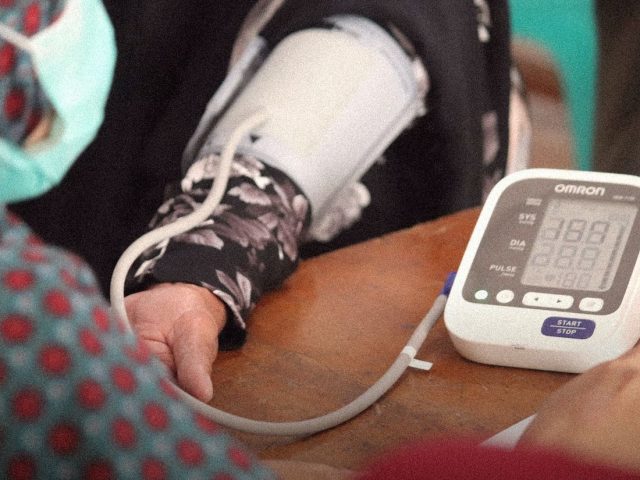
Blood pressure is the single most useful number on the list. It is cheap, reliable when measured properly and tied to clear treatment thresholds. England’s NICE hypertension guideline (NG136) uses a home average of 135/85 mmHg or higher, from a validated upper-arm monitor over several days, to confirm stage 1 hypertension. A one-off reading taken after a massage at a spa is not the same thing.
Lipids matter for the same reason: LDL cholesterol and ApoB (a count of the particles that carry cholesterol into artery walls) feed directly into decisions about diet, statins and other drugs. Lipoprotein(a) is largely inherited, barely changes with lifestyle and European cardiology guidelines suggest measuring it at least once in adulthood, because a high result raises heart risk and should prompt testing of close relatives. If a longevity clinic adds Lp(a) to your panel, that is a genuinely useful extra.
HbA1c and fasting glucose diagnose diabetes and prediabetes with agreed thresholds. They are among the few tests where a borderline result reliably leads to a useful action.
Coronary artery calcium scoring, a low-dose CT scan of the heart, is useful in a specific group: adults at intermediate risk where the result could tip a treatment decision one way or the other. It is not a routine screen for everyone, and it involves radiation. Clinique La Prairie, for example, includes one only in its top-tier program, after a medical evaluation.
Newer blood markers sit just beyond this group. In Finnish population data, a ceramide-based risk score added information about cardiovascular events beyond standard risk factors (Hilvo et al., European Heart Journal Open, 2021). It is a real biomarker, but it is not yet built into the risk calculators doctors use to decide treatment.
Fitness, Strength and Body Composition: The Underrated Longevity Markers
If one test deserves a place at every longevity clinic, it is a proper fitness test. A meta-analysis of 33 studies found each one-MET increase in fitness linked to about a 13 percent lower risk of death from any cause (Kodama et al., JAMA, 2009). In more than 120,000 adults treadmill-tested at the Cleveland Clinic, the fittest had the lowest mortality, with no upper limit to the benefit (Mandsager et al., JAMA Network Open, 2018).
The value is practical. A measured VO2 max or treadmill result gives you a training target, and repeating it after three months shows whether your program is working. Grip strength and simple tests such as rising from a chair are similarly cheap and predictive in older adults. Strength training is one area where a test leads straight to an action with good evidence behind it.
DEXA does two different jobs. As a bone density scan, it diagnoses osteoporosis and guides treatment, which makes it clearly useful for postmenopausal women and others at risk. As a body composition scan, it is the most accurate widely available way to track fat, lean mass and visceral fat, far better than a bathroom scale: three consumer smart scales tested against DXA in a French hospital study all underestimated fat mass, by a median of 2.2 to 4.4 kg (Frija-Masson et al., JMIR mHealth and uHealth, 2021). There are no agreed treatment thresholds for DEXA body fat, though, so its main use is tracking change. Our guide to the best smart scales explains what home devices can and cannot do.
Continuous Glucose Monitors in People Without Diabetes
Several retreats now hand guests a glucose sensor for the week. In healthy adults, glucose is remarkably stable: a study of 153 people without diabetes found they spent a median 96 percent of the day between 70 and 140 mg/dL (Shah et al., Journal of Clinical Endocrinology and Metabolism, 2019). Sensors also disagree with each other. When 16 adults without diabetes wore a Dexcom and an Abbott sensor at the same time, the two agreed only moderately on which meals caused the biggest rises (Howard, Guo and Hall, American Journal of Clinical Nutrition, 2020).
The sensors can be motivating, especially for people with prediabetes. But there is no trial showing that healthy people who flatten their glucose curves live longer or avoid disease. Our Stelo vs Lingo comparison sets out who over-the-counter sensors suit.
Genetic Tests: Clinical Genetics vs Lifestyle DNA
Genetic testing is two different products sold under one name.
Clinical genetic testing looks for specific, well-understood variants, such as those behind hereditary breast and ovarian cancer, Lynch syndrome or familial hypercholesterolemia, usually because of personal or family history. A positive result changes screening, prevention and sometimes surgery, and affects relatives. It should come with genetic counseling.
Lifestyle and nutrition DNA tests promise to tell you which diet suits your genes. The best evidence says they do not. In the DIETFITS randomized trial of 609 adults, a genotype pattern supposed to predict success on low-fat or low-carb eating made no difference to weight loss over 12 months (Gardner et al., JAMA, 2018). If a clinic’s genetic report tells you to eat more vegetables and move more, you did not need the test.
Gut Microbiome Tests
The gut microbiome is one of the most active areas in biology, and that is the problem: science has not agreed what a “healthy” microbiome looks like for an individual. Consumer tests also vary. When US National Institute of Standards and Technology researchers sent identical stool samples to seven consumer testing companies, the results differed widely, and one company called the same sample both “healthy” and “unhealthy” (NIST study, Communications Biology, 2025).
The specialists agree. A 2025 international consensus on microbiome testing in clinical practice found insufficient evidence to recommend routine testing, said patients’ direct requests for tests should be discouraged, and strongly discouraged testing companies from giving treatment advice on the back of their reports (Porcari et al., Lancet Gastroenterology and Hepatology, 2025). Stool tests are useful in specific medical situations, such as identifying certain infections. As a longevity test, a microbiome map is a research curiosity, and probiotic plans built on it are guesswork.
Telomere Length Testing
Telomeres, the protective caps on chromosomes, shorten as cells divide, so telomere length looks like a natural “cell age.” In practice, it is a poor individual test. Telomere length differs a good deal between healthy people of the same age, between cell types and between laboratory methods, so a single measurement cannot tell you whether you are aging faster or what to do about it.
Telomeres are also a favorite endpoint in longevity marketing. The study behind many hyperbaric oxygen claims reported longer telomeres in blood cells after 60 sessions, but it had 35 participants, no control group and authors employed by the company running the clinics (Hachmo et al., Aging, 2020). Changes in the composition of blood cells can shift average telomere length without any cell becoming “younger.”
What would a doctor change after a short telomere result? Nothing that they would not already recommend: exercise, sleep, not smoking, managing blood pressure.
Epigenetic Clocks and Biological Age Scores
Epigenetic clocks estimate age from chemical marks on DNA, and some newer versions estimate the pace of aging. At population level they are impressive: they predict death and disease better than chance, and they are valuable tools in research trials.
For an individual, the picture is different. In 2024 the Biomarkers of Aging Consortium set out how aging biomarkers should be validated before clinical use (Moqri et al., Nature Medicine, 2024), and none of the commercial clocks sold to consumers has completed that process. Different clocks can give different ages for the same person, and no clock has been shown to guide a treatment that improves outcomes.
So if a clinic tells you that you are biologically four years younger after a week of retreat, treat that as a result about the test, not about you. Above all, a change in a score is not years of life gained.
Proprietary Longevity Scores and Indices
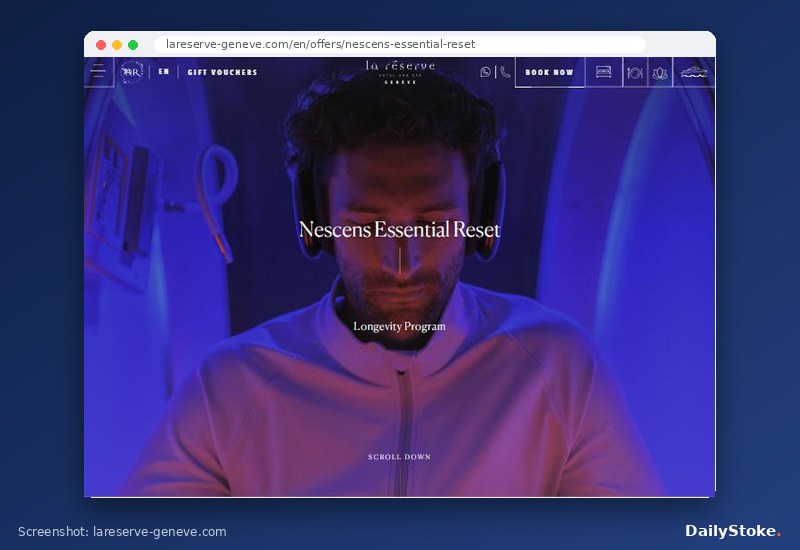
A growing number of retreats bundle tests into their own composite score. La Réserve Genève’s Nescens program measures a Regenerative Capacity Score at the start and end of a five-day stay; Clinique La Prairie sells glycan-based “biological age”; others offer “true age” or vitality indices. We look at the Nescens score in our La Réserve Genève Nescens review.
The questions are always the same. Is the method published? Has it been tested against health outcomes in people other than the clinic’s guests? Has anyone outside the company replicated it? We have not found a proprietary retreat score that passes all three. And a score measured before and after a week of rest, food and exercise is almost guaranteed to improve.
Broad Screening Panels, Before-and-After Tests and the Incidental Findings Problem
The bigger the panel, the more likely something lands just outside the normal range. Reference ranges are usually set so that about one in twenty healthy people falls outside them on any single test, so a panel of dozens of markers will almost always flag something.
Screening at scale shows how this plays out even with a good test. In the Apple Heart Study of 419,297 people, 0.52 percent received an irregular pulse notification; among those whose follow-up ECG patch could be analyzed, 34 percent had atrial fibrillation confirmed (Perez et al., New England Journal of Medicine, 2019). Most alerts led to follow-up rather than diagnosis. Multiply that pattern across 200 biomarkers or a whole-body scan and you see why incidental findings are a real cost.
Timing matters too. Tests taken during a retreat measure a body under unusual conditions. Fasting in particular can temporarily shift important biomarkers, which is why baseline bloods are best drawn before a fasting diet starts. Blood taken on day five of a fast, or after a week of hyperbaric sessions and massages, tells you about that week. Our Chenot Method investigation looks at what fasting does to the numbers.
Finally, ask who follows up. A test with no doctor to interpret it, no plan for an abnormal result and no repeat measurement months later is information without care.
Study Evidence Table
| Study | Design | Participants | Intervention or exposure | Comparator | Endpoints | Results | Limitations | Conflicts of interest |
|---|---|---|---|---|---|---|---|---|
| Mandsager et al., JAMA Netw Open, 2018 | Retrospective cohort | More than 120,000 adults treadmill-tested at one US center | Measured cardiorespiratory fitness | Lower fitness groups | All-cause mortality | Mortality fell with each higher fitness level; no upper limit | Observational; referred patients; one center | Academic, single-center study |
| Gardner et al. (DIETFITS), JAMA, 2018 | Randomized trial | 609 adults with overweight | Healthy low-fat or healthy low-carb diet; genotype pattern tested | The other diet | Weight change at 12 months | No meaningful difference between diets; genotype did not predict success | One genotype panel; adherence varied | Publicly and philanthropically funded |
| Hilvo et al., Eur Heart J Open, 2021 | Prospective cohort | Finnish population cohort | Ceramide and phospholipid risk score | Lower score levels, adjusted for standard risk factors | Cardiovascular events and death | Score linked to outcomes beyond cholesterol | Observational; not tested as a treatment guide | Developers of the score among the authors |
| NIST study, Commun Biol, 2025 | Inter-laboratory comparison | Identical stool samples sent to seven consumer companies | Commercial microbiome testing | Same sample across companies | Agreement of reports | Wide disagreement; one sample called both healthy and unhealthy | Snapshot of commercial services | Government laboratory |
| Hachmo et al., Aging, 2020 | Single-arm prospective trial | 35 healthy adults aged 64+ (25 with telomere data) | 60 hyperbaric oxygen sessions at 2 ATA | None (before-after) | Blood-cell telomere length, senescent cells | Telomeres reported over 20% longer | No control group; short follow-up; inconsistencies in reporting | Three authors employed by AVIV Scientific; senior author a shareholder |
| Howard, Guo and Hall, AJCN, 2020 | Device comparison | 16 adults without diabetes | Two CGM brands worn together | Each other | Agreement on meal responses | Only moderate agreement | Small sample | US National Institutes of Health researchers |
| Frija-Masson et al., JMIR mHealth, 2021 | Device validation | Adults at a French hospital | Three consumer smart scales | DXA | Weight and fat mass | Weight accurate; fat mass underestimated by a median 2.2 to 4.4 kg | Single center; three devices | Academic hospital study |
| Perez et al. (Apple Heart Study), NEJM, 2019 | Single-arm pragmatic study | 419,297 smartwatch users | Irregular pulse notification | None | Atrial fibrillation on ECG patch | 0.52% notified; 34% of analyzable patches confirmed AF | Low patch return; volunteer population | Sponsored by Apple |
Questions to Ask Before You Pay for a Longevity Test
- Which of these tests is clinically indicated for me, given my age, history and family history?
- For each result, what is the threshold at which you would recommend a change, and what would it be?
- Is the method of any proprietary score published, and has it been validated outside your clinic?
- Will blood be drawn before any fasting or treatments begin?
- What happens if something unexpected shows up, and who pays for the follow-up?
- Will you repeat the key measurements in three to six months, and will a doctor review them with me?
- Who stores my genetic and health data, and can I have it deleted?
Longevity Testing in 2027: Clocks, Sensors and Scores
In 2027 the longevity test menu is longer than ever, and the gap between what can be measured and what can be acted on is as wide as it was. Over-the-counter glucose sensors have been on sale in the US since 2024, when the FDA cleared Dexcom’s Stelo and Abbott’s Lingo, and Abbott’s Lingo has been sold in the UK since January 2024. Luxury retreats now build programs around proprietary scores, such as the Regenerative Capacity Score that Nescens introduced with its Essential Reset at La Réserve Genève in 2026, and top-tier programs at Clinique La Prairie include epigenetic testing. Meanwhile no epigenetic clock has been validated to guide treatment for an individual.
Longevity Medical Tests: Your Questions Answered
Which blood tests are most useful for longevity?
The standard ones: a lipid profile including ApoB, lipoprotein(a) at least once, HbA1c or fasting glucose, kidney and liver function, and a full blood count, interpreted alongside blood pressure, weight, family history and smoking. These have clear thresholds and proven treatments.
Are biological age tests accurate?
They are reasonably good at describing groups of people in research, but not reliable enough to guide decisions for an individual. Different tests give different ages, and a short-term change after a retreat should not be read as years gained or lost.
Is a DEXA scan worth it?
For bone density in people at risk of osteoporosis, yes. For body composition, it is the most accurate common way to track fat and muscle, which can be useful if you are training or losing weight, but there are no agreed treatment thresholds for the result.
Should I get a telomere test?
We would not pay for one. Telomere length varies widely between people and methods, and the result does not lead to any action beyond standard advice on exercise, sleep, diet and not smoking.
Are full-body scans or 200-biomarker panels a good idea?
For healthy people, they raise the chance of incidental findings that lead to more tests and worry, and we found no good evidence that screening everything in this way improves health. Testing guided by your personal risk, with a doctor to follow up, is more useful than testing everything.
Can I get the useful tests without a longevity clinic?
Mostly, yes. Blood pressure, lipids, glucose and many other standard checks are available through primary care or a private GP, and fitness testing through sports-medicine clinics. In England, adults aged 40 to 74 without existing conditions are invited for a free NHS Health Check every five years.