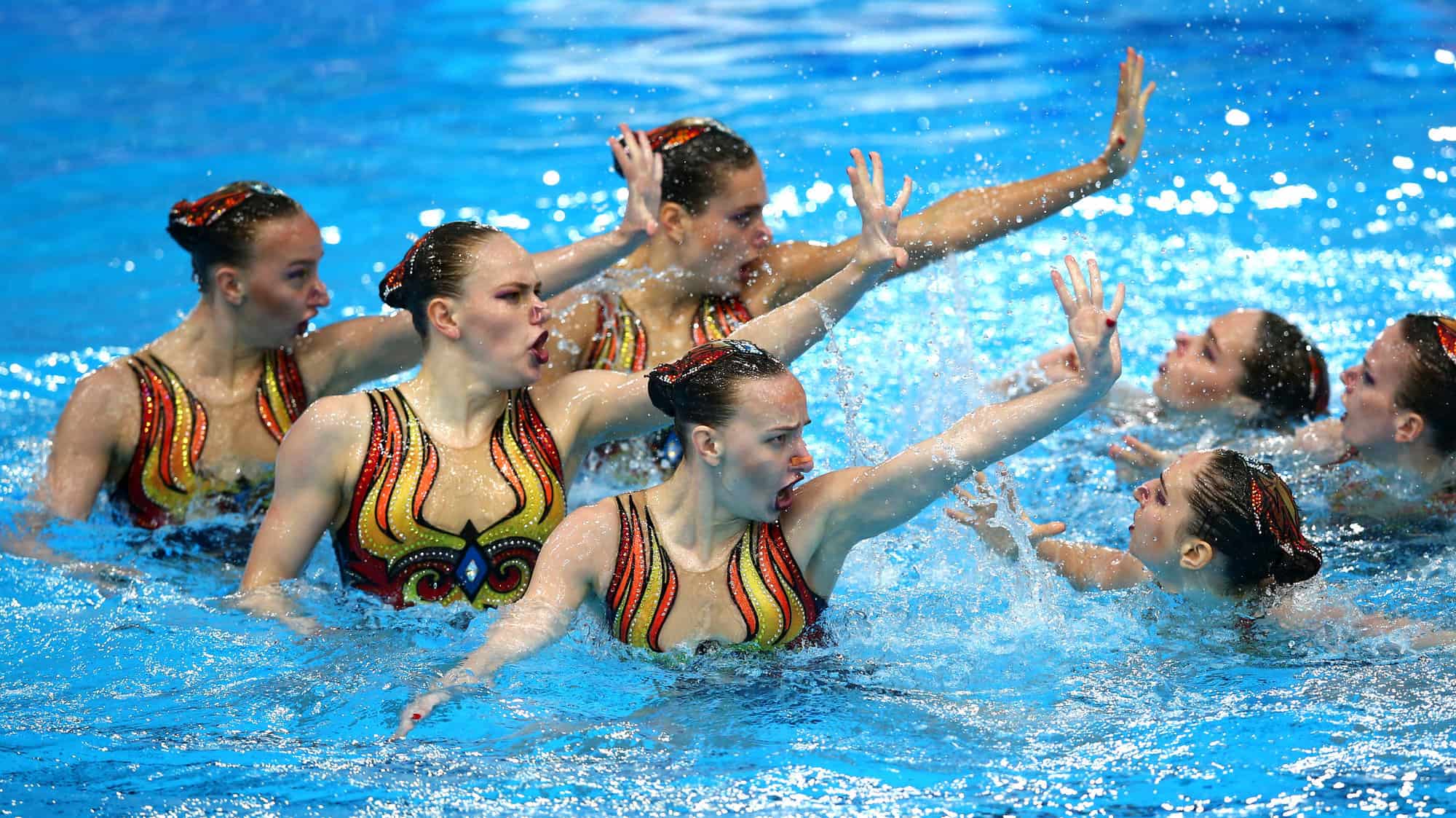
Artistic swimming is one of the more unusual sports to bet on. There is no finish line or fastest time. Swimmers perform routines to music and are scored on difficulty, execution, synchronization and artistic impression.
That makes betting on it different from a race or team sport. Recent results matter, but so do routine difficulty and how consistently a team performs.
Betting markets are relatively limited, so odds tend to appear mainly around major events such as the Olympics and World Championships.
How Artistic Swimming Works
Artistic swimming was previously known as synchronized swimming.
At Olympic level, swimmers compete in duet and team events. Routines combine synchronized movements, lifts, spins and underwater elements performed to music.
The modern scoring system places more emphasis on the difficulty of the elements being attempted, as well as how well they are executed.
That creates a simple trade-off: harder routines offer more scoring potential, but they also give swimmers more opportunities to make mistakes.
How Artistic Swimming Is Scored
Judges and technical officials assess several parts of a routine.
Difficulty reflects how demanding the declared elements are.
Execution measures how well those elements are performed.
Artistic impression looks at areas such as choreography, presentation and musical interpretation.
Synchronization also matters. Even small timing differences between swimmers can reduce a score.
For betting purposes, this means the team attempting the hardest routine is not automatically the safest choice.
A slightly easier routine performed cleanly can beat a more difficult one that includes technical or synchronization errors.
Betting on Artistic Swimming
Artistic swimming is a niche betting market.
You are unlikely to find the same number of options available for football, tennis or horse racing. Markets are more likely to appear during the Olympics and other major international competitions.
Depending on the sportsbook and event, you may see bets on:
- Overall winner
- Medal or podium finish
- Winning country
- Duet winner
- Team winner
- Head-to-head matchups
Availability varies, so check whether a sportsbook is actually offering the event before doing too much research.
What to Look at Before Betting
Final positions only tell part of the story.
A team might finish second despite producing an excellent routine because of one costly error. Another may win because a favorite made a mistake.
It is worth looking at the scores behind the result.
Recent Scores
Repeated high scores across several competitions are generally more useful than one standout result.
Look for teams that are performing consistently rather than relying only on medals or reputation.
Difficulty
Higher difficulty gives a team more scoring potential, but it also increases risk.
If a favorite is attempting a particularly ambitious routine, the odds should reflect the possibility of execution problems.
Execution and Synchronization
A difficult routine is only valuable if the swimmers can perform it cleanly.
Teams that regularly lose points through synchronization or technical mistakes can be risky at short odds.
Team Changes
Do not rely too heavily on a country’s past reputation.
Lineups change between seasons and Olympic cycles, so recent performances from the current team are more useful than results from several years ago.
Artistic Swimming at the Olympics
Artistic swimming has changed considerably in recent years.
The Olympic team competition now includes technical, free and acrobatic routines. Men are also eligible to compete in the team event, with up to two men permitted in an eight-person team.
That matters when comparing current performances with older Olympic results. The format and scoring system have changed, so results from previous Games are not always directly comparable.
Artistic swimming will return at LA28, with competition scheduled for the Long Beach Aquatics Center.
Closer to the Games, World Championship and World Cup results should give a much better indication of likely medal contenders than performances from earlier Olympic cycles.
Photo by Sportbox